Ecological benefits
  • Significant reduction of pollutant emissions
  • Carbon monoxide (CO) up to 36%
  • Hydrocarbons (CHx) up to 30%
  • Oxides of nitrogen up to 20%
  • Minimization of carcinogenic substances of diesel engines
  • Soot particles up to 80%
  • Measurement results confirmed by German TÜV
  • Fully recyclable when returned to producer
  • Environmentally friendly due to an environmental study being carried out by the Steinbeis-Transferzentrum Coburg
  • Verified reduced fuel consumption between 8% and 15%, up to 10% oil savings on heating systems
  • Avoidance of
  • 2.36 kg CO2 per saved liter gasoline
  • 2.67 kg CO2 per saved liter diesel
  • Low noise pollution due to quieter engine noise
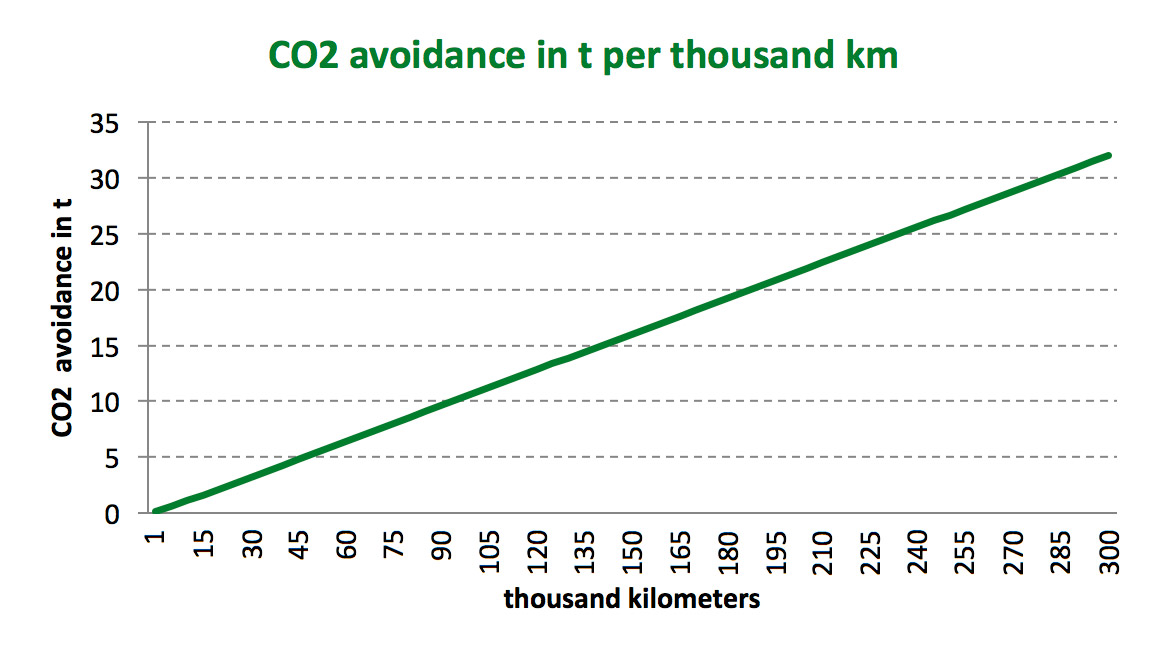
Calculation example regarding CO2 avoidance based on a mounted KKF in a bus / truck (city traffic / overland transportation)
  • Assumptions
  • Fuel consumption 40 liter diesel per 100 km
  • 10% fuel savings due to KKF installation
  • Avoidance of 2.67 kg CO2 per saved liter diesel
  • Due to the fuel saving of the KKF usage 10.7 t / 32 t CO2 emissions could be avoided after 100 / 300 thousand kilometers
Economical benefits
  • Verified reduced fuel consumption between 8% and 15%, up to 10% oil savings on heating systems
  • Guaranteed buyback, depending on kilometer reading and running performance
  • Longevity of engine (600.000 km) and  exhaust system
  • Reduced service cost
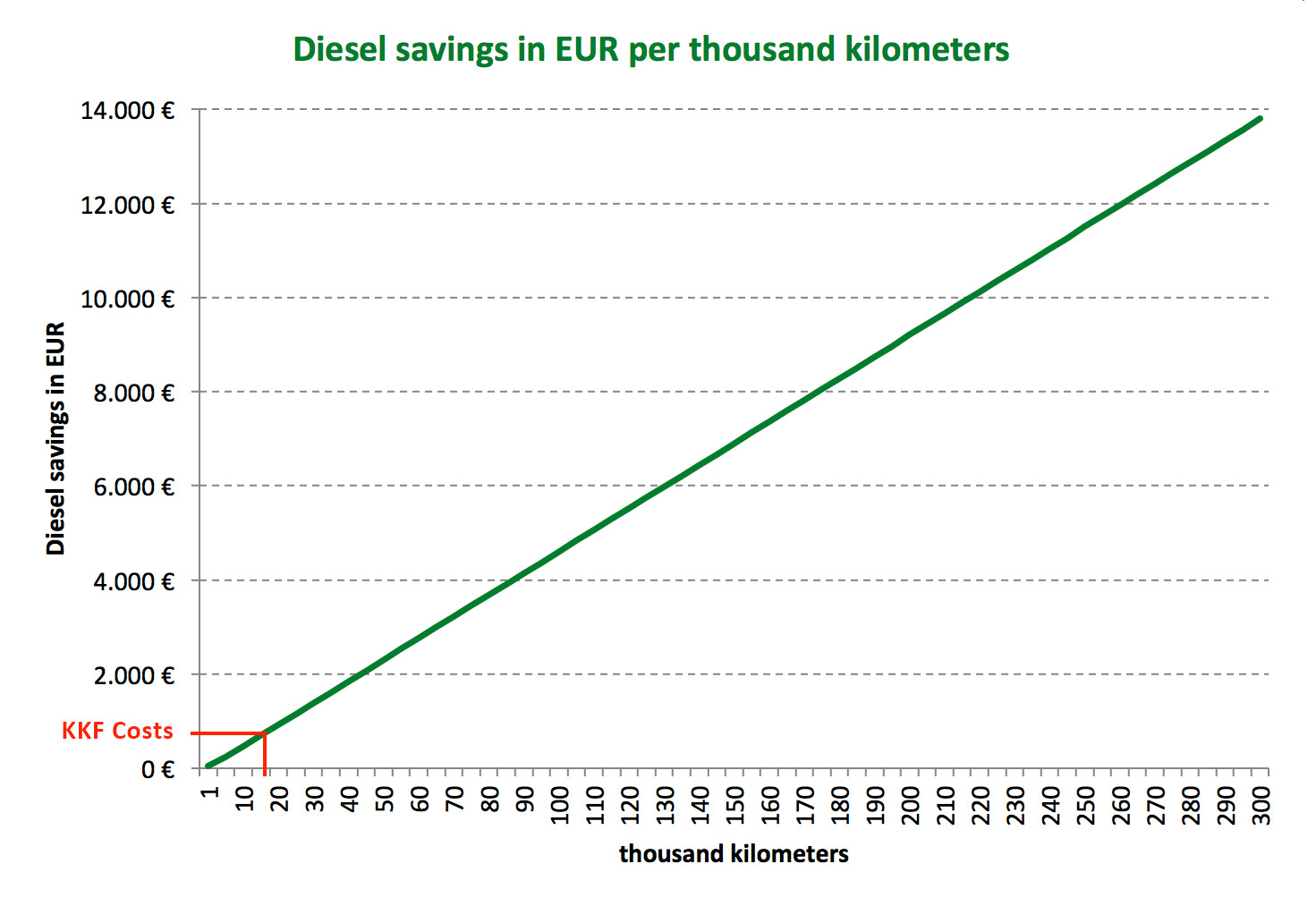
Calculation example regarding diesel savings based on a mounted KKF in a bus / truck (city traffic / overland transportation)
  • Assumptions
  • One-off cost for a big KKF
  • Price of diesel per liter EUR 1.15
  • Diesel consumption 40 liter per 100 km
  • Fuel savings through KKF 10%
  • KKF has been amortized after 15.000 km already
  • Given a running performance of 300.000 km, savings sum up to EUR 13.000 after costs
  • Following savings and expenses haven‘t been taken into account in the graph
  • Installation cost (about EUR 100)
  • Longevity of engine
  • Persistance of exhaust system
Technical benefits
  • Higher engine power, acceleration and torque
  • Softer and smoother cold-start and running performance
  • Considerable improvement of ignition and combustion properties
  • Lengthening of kilometer reading (up to 600.000 km) and lifetime of exhaust system
  • No residues inside the engine’s combustion chamber due to high-value of fuel
  • Variable use as custom-made KKFs are available for all engine sizes and types (15.000 hp and more)