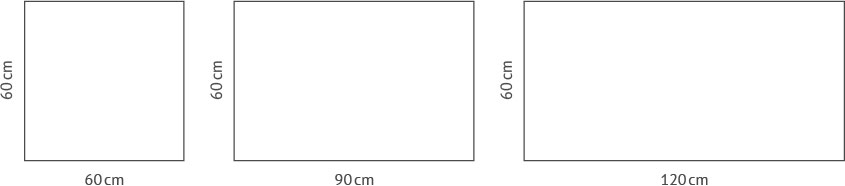

Marble-look photon-heating
What is photon-heating?
Unlike conventional forms of heating (oil, gas, pellets, district heating), electric photon-heating is not so much based on warming ambient air, but rather on warming the surrounding surfaces (e.g. furniture, ceilings and walls), and on their heat absorption.
Photon-heating is as an advanced form of the technically outdated concept of infrared heating, operating actively and passively based on the latest developments, and thus requiring significantly less energy despite a greater conversion of usable heat.
Photon-heating is as an advanced form of the technically outdated concept of infrared heating, operating actively and passively based on the latest developments, and thus requiring significantly less energy despite a greater conversion of usable heat.
How exactly does photon-heating work?

Electric photon-heating involves using non-metallic conductors to directly transfer actively generated infrared light onto the surrounding areas through specific surfaces (e.g. glass, mirrors, granite).
The infrared radiation here remains largely within the relevant, healthy heat range for humans (around 10 μm), resulting in an optimum ambient temperature.
The infrared radiation here remains largely within the relevant, healthy heat range for humans (around 10 μm), resulting in an optimum ambient temperature.

The infrared light warms not only the human body, but also other objects in the room (e.g. furniture), as well as ceilings and walls, which emit part of the absorbed thermal radiation into the room through reflection. This allows the temperature of the surrounding surfaces (furniture, ceilings, walls) to roughly match that of the ambient air, thereby considerably reducing air rotation (convection). The result is virtually even heat distribution throughout the room, with air humidity levelling off into optimum indoor climate conditions.

In addition to the aforementioned active heating process, the warmed surface of the photon heater also passively emits thermal radiation and convective heat into the room, uniquely converting almost 100% of the usable heat.
As photon-heating operates within an optimum heat-wave range, the heating elements require lower temperatures in order to achieve the optimum wavelengths, which can significantly reduce energy demands (power consumption).
As photon-heating operates within an optimum heat-wave range, the heating elements require lower temperatures in order to achieve the optimum wavelengths, which can significantly reduce energy demands (power consumption).
What is thermal radiation?
Thermal radiation is a type of heat transfer in which heat is transmitted through electromagnetic waves (infrared radiation, infrared light).
Humans distinguish between an apparent temperature and the actual temperature, with the former considered more important. For example, when the outside temperature is 16°C, the apparent temperature in the sun is much higher than in the shade. This is thanks to the infrared radiation within a certain heat - wave range, as shown in the diagram.
The optimum apparent temperature for humans does not lie within the entire heat range, but rather only in the middle section of the infrared radiation range (around 10 μm).
Humans distinguish between an apparent temperature and the actual temperature, with the former considered more important. For example, when the outside temperature is 16°C, the apparent temperature in the sun is much higher than in the shade. This is thanks to the infrared radiation within a certain heat - wave range, as shown in the diagram.
The optimum apparent temperature for humans does not lie within the entire heat range, but rather only in the middle section of the infrared radiation range (around 10 μm).
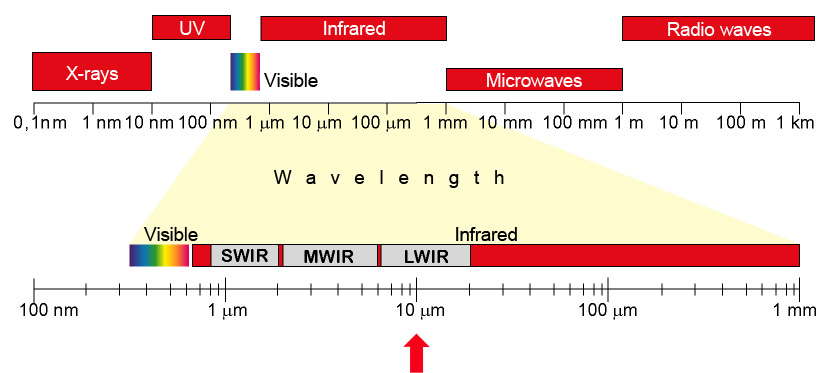
Optimum infrared radiation range for humans