
Consumption cost of the photon heating
Contrary to many opinions, electrically powered infrared heaters are no more expensive than oil and gas heaters or heat pumps. Above all, photon heaters, whose average consumption is up to 30% less than other infrared heaters, are particularly economical and efficient.
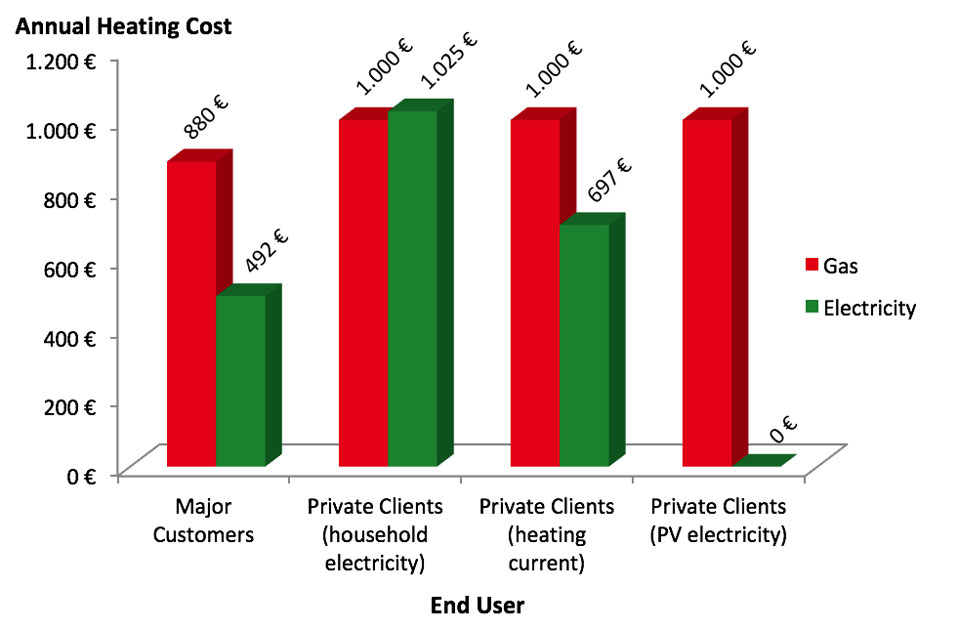
To illustrate this, the graph below shows the comparison of heating costs between gas and photon heating, based on the average consumption of a 50 m² apartment with medium insulation and 2 residents.
To illustrate this, the graph below shows the comparison of heating costs between gas and photon heating, based on the average consumption of a 50 m² apartment with medium insulation and 2 residents.
The following assumptions are based on the calculations:
-
Calculation basis for gas consumption is the annual official average value of 8,000 kWh compared to the photon heating with 4,100 kWh which includes the hot water generation for 2 people
-
Running costs (such as maintenance) of the gas heaters were added to the gas price as a surcharge, as was a surcharge for hot water generation in photon heating (1,600 kWh)
-
The underlying gas prices are 6 and 7.5 cents (cost surcharge 5 cents), electricity prices have been calculated at 12 cents (major customers), 17 cents (heating current) and 25 cents (household electricity)
-
Neither acquisition costs, which are up to 40% lower than those of gas heating systems, nor electricity costs of the circulation pump as part of the gas heating system, are included in the calculation!
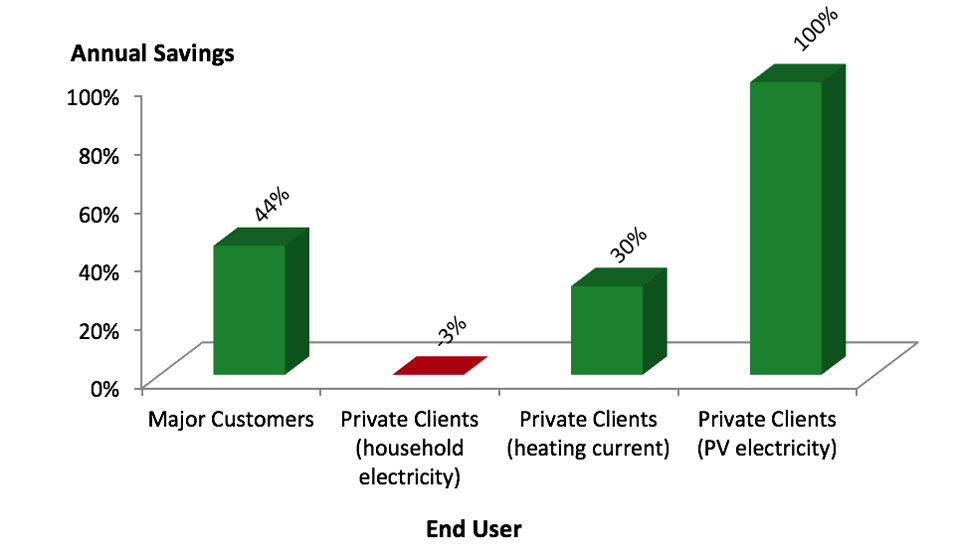
Depending on electricity tariff / generation, heating cost savings of up to 100% can be achieved. If, in addition, the electricity costs of the circulation pump and the up to 40% higher acquisition costs of the gas heating are taken into account, it significantly increases the heating cost savings for the photon heating.
The calculations are based only on the consumption values of the economical and efficient photon heating and are not applicable to conventional infrared heaters, as their consumption is up to 30% higher!
In addition, it is assumed that gas prices will rise again in relation to electricity prices in the future. This is also underpinned historically, as the energy price development of the German BMWi (Federal Ministry for Economic Affairs and Energy) illustrates in the following graph.
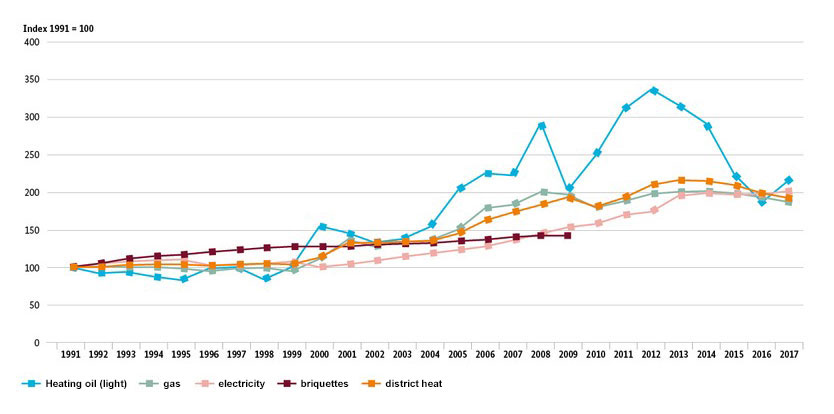
Source:© Bundesministerium für Wirtschaft und Energie (BMWi) auf der Basis der Indexwerte des Statistischen Bundesamts (StBa) vom 23.01.2018